Posts Tagged ‘frankincense’

French Lavender: In Great Distress

Friday, March 11th, 2011

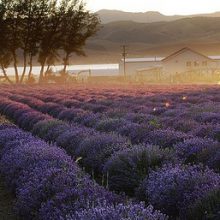
Sunset at the Mona, Utah, lavender farm

What would I do if I couldn’t get pure essential oils? How do I know if the essential oils I am buying are pure? How can I know the origin and the species of the oil I am buying? Does this mean that I need to question whether all the oils I may be buying that I am told are pure are actually pure? Because the salesperson and the promotional literature say so, does that make it so?

These are the questions that every person representing, selling, buying, or using essential oils should be asking. If you buy an oil from a broker who tells you it is pure, does it guarantee that it is? Absolutely not! Many essential oils come from countries far away from us, and visiting the distilleries could be very difficult.

An essential oil such as frankincense is one where people can easily be deceived. Even if you were to go to Oman and buy directly from the market in Salalah, the land of frankincense, could you be guaranteed that you are buying pure Boswellia sacra frankincense? Absolutely not!

But, you could more easily travel to France to see fields of lavender being harvested and distilled, or could you? That certainly was possible in years past, and tens of thousands of visitors have done just that. But what is happening today in France? Lavender, one of the world’s most favored essential oils, is currently in great distress. Many difficult circumstances surround this beautiful oil, and if you go to France today and buy directly from a producer, does this guarantee that you are buying 100 percent pure Lavandula angustifolia—pure lavender essential oil? Absolutely not!

Technorati Tags: , , , , , , , , , , , , , , ,

Part 3: Finding Pure Essential Oils

Friday, October 29th, 2010

Herbal pharmacy at clinic

At home that night, I began reading and did not stop until 3 a.m. I could not sleep from the excitement I felt about this new discovery! The study was made by several researchers who found certain essential oils to have anti-infectious properties, anti-inflammatory properties, and immune-supporting actions. In fact, the study described how the essential oils could increase the uptake of oxygen and the delivery of ATP (adenosine triphosphate) to the cells.

I reread and highlighted the research until 6 a.m. As soon as I felt it wasn’t too early, I picked up the phone and dialed the number Annemarie had left on the back page. She answered the phone on the first ring and said, “Dr. Young, I was expecting you to call. What did you think?”

I told her that I found the information fascinating and that it made a lot of sense. I then asked the million dollar question, “Where can I learn more?”

Just seven days later, I was sitting in a classroom in the medical department at the University of Geneva, Switzerland, attending a 40-hour seminar on the chemistry of essential oils and their function and action against infection and immune support. The course was taught by Jean Claude Lapraz, M.D., and Paul Duraffourd, M.D.

Following the conference, I traveled to Paris to spend a week with Dr. Lapraz to learn even more about essential oils. Before returning to the U.S., I purchased 1 liter each of 13 different essential oils: frankincense, myrrh, lavender, thyme, oregano, peppermint, lemon, rosemary, marjoram, basil, mountain savory, ravensara, and hyssop. And so began my journey into a new frontier: the study of real plant medicine.

To be continued . . .

Technorati Tags: , , , , , , , , , , , , , , , , , , , , , , , , , , , , , ,

The One Gift

Tuesday, July 13th, 2010

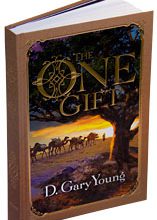
The One Gift by Gary YoungI am so pleased at how well my book, The One Gift, was received. I never dreamed we’d be headed to a second printing so quickly!

Writing historical fiction can be difficult, but it seems that the story I wrote has kept a few of you reading until the wee hours of the morning—even though I wove factual history into the storyline.

On one of my trips to Oman in 2009, I interviewed the world-renowned archaeologist Yuri Zarins. I asked him about the ancient canal that linked the River Nile in Egypt with the Red Sea. He seemed surprised that I knew about this canal. There’s not much about the frankincense region that I haven’t studied.

There is a kidnapping in my book and the lead character, Shutran, thinks fast about why the people were kidnapped and where to ambush them. “These pirates are after slaves to sell to the Pharaoh in Egypt . . . the pirates will take the slaves and a few horses and head to Aila to put them on a boat to go up the Red Sea, taking the canal over to the Nile, and sailing up to Luxor.”

I was able to document that waterway existed anciently. A study by Carol A. Redmount, The Wadi Tumilat and the “Canal of the Pharaohs,” was published in the Journal of Near Eastern Studies, and Alan B. Lloyd’s “Necho and the Red Sea: Some Considerations” was published in the Journal of Egyptian Archaeology. The One Gift is a fictional tale of caravans but because it’s based on historical fact, reading it will be like traveling back in time!

Technorati Tags: , , , , , , ,

Boswellia sacra

Wednesday, June 30th, 2010

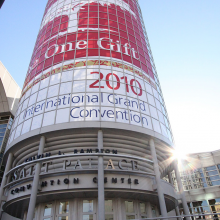
I hope my readers can understand the joy that filled my heart at convention as I saw a dream come true. For 15 long years, I have traveled to the Middle East in search of the most precious frankincense essential oil of all: Omani hojari. At the 2010 Young Living Grand Convention it was my great honor to place this treasured oil in distributors’ hands.

Omani hojari is beloved of Omani royalty and the royal family of Saudi Arabia. It grows in the Dhofar region of Oman. In meetings with trade officials in the Ministry of Agriculture in Salalah, Oman, I learned that the only species of frankincense that grows in the kingdom of Oman is Boswellia sacra. This species has a higher content of the constituent alpha pinene than frankincense oil from Boswellia carteri, even though both varieties carry frankincense’s therapeutic power.

Because Young Living has established two distilleries in Oman and fulfilled all Omani government requirements, for the first time in modern history frankincense is being exported from Oman. REAL Omani hojari!

At the Young Living Product Expo at the Young Living convention, distributors swarmed the single oil booths and were thrilled with the new frankincense oil from Oman: Sacred Frankincense. Young Living staff who shared samples of the oil reported that our distributors were surprised by the lighter, sweeter scent of Boswellia sacra and many actually experienced its uplifting, spiritual effect. I am gratified to know that prayer and meditation for thousands of Young Living distributors will now be enhanced thanks to the use of Sacred Frankincense.

My heartfelt thanks to the Young Living distributors who so warmly embraced this new Young Living essential oil!

Technorati Tags: , , , ,

12 Oils of Ancient Scripture: Frankincense, part I

Tuesday, December 8th, 2009

This is the beginning of the story of 12 Oils of Ancient Scripture, including some exciting experiences of Gary Young as he has traveled and studied around the world. Today, Gary Young recounts one particular experience in traveling to southern Arabia to discover the secrets of the frankincense tree.

clip_image002

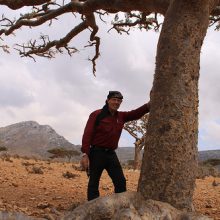
One particular morning I arose from bed in a city called Salalah in southern Arabia. I’ll never forget the excitement that was in my heart as I realized that morning that Mary and I were going to travel into the mountains in eastern Oman to see, to feel, to touch, to experience the magnificence of the greatest storied tree in world history: the frankincense tree.

The excitement grew as I thought about when we would journey into the empty quarter to see the city of Od, now referred to as the lost city of Ubar—the Atlantis of the desert. A city where the trade of frankincense and myrrh and balsam took place; where fine linens and silks came across the Silk Road from China, Tibet, and India and journeyed all the way into Southern Arabia to trade for the precious ointments and the precious resins of frankincense and myrrh. A commodity that was so wealthy that the kings prized their wealth upon the volume of this great ointment and resin that they possessed. That the newborn kings and queens were anointed with these precious oils. Why? Why were these such praised and sought-after commodities?

As I stood at the foot of a frankincense tree looking up into the branches, I realized that I was touching a tree that produced a resin that could be distilled into an oil with which the Christ child may have been anointed with; an oil that was anciently regarded as being more valuable than gold; and one of the most powerful natural healing substances known. Trader ships from Sri Lanka, India, China, Japan, Egypt, and various ports of the world brought spices, linens, gold, and silver to make the journey to the lost city of Ubar to trade for the precious ointments. We read in Exodus that these substances were regarded as very special, very sacred elements:

“And the Lord said unto Moses, ‘Take unto thee sweet spices spectate and galbanum, these sweet spices with pure frankincense of each there should be a like weight. And thou shall make it a perfume, a confection after the art of the apothecary, tempered together pure and holy. And thou shall beat some of it very small and put it before the testimony in the tabernacle of the congregation where I will meet with thee. It shall be unto you most holy.’”

Stay tuned for more adventures and education about my travels and the 12 Oils of Ancient Scripture!

Essentially Yours,

Gary Young

Technorati Tags: , ,