Archive for February, 2010

12 Oils of Ancient Scripture: Cassia

Tuesday, February 16th, 2010

In the last installment featuring the 12 Oils of Ancient Scripture, Gary Young discusses the history of cassia and highlights the importance of learning about these unique essential oils.

One of the oldest known spices, cassia oil was distilled from the leaves and twigs and was a highly prized aromatic very similar to cinnamon bark in fragrance and in chemistry.

Like cinnamon, cassia contains compounds that have been shown to inhibit the growth of many types of bacteria and support immune function. A recent study conducted at the Kentucky School of Medicine showed that extracts of this herb can stimulate T lymphocyte activity and immunoglobulin production by B cells, which are key elements of immune function.

How was cassia used for its spiritual purposes? We don’t know exactly. The Egyptians believed in multiple gods, so they adorned themselves with multiple oils to please them. We know that these oils were so treasured that they were also recognized for their powerful ability to help increase spiritual connection and awareness.

We also have to keep in mind that in ancient times the majority of people did not have access to written records or have the ability to read or write. This is why they communicated through touch and scent. Cassia, myrrh, and sandalwood were some of the oils that were used in mummification or burial. They believed that essential oils preserved the body and carried it into the afterlife and prepared them for their journey back. Some people even believed that the oils created a fragrance trail that could be followed back to the present world. Perhaps this is why these oils were regarded with such high esteem. But there are still many aspects that we don’t understand at this time.

If we derived physical benefits from these oils we may also derive spiritual benefits as well. I have traveled the ancient lands and gone to these ancient places, from the shores of the Arabian Sea to the Red Sea. I have traveled the vast wilderness of the desert to the lost city of Ubar, the Atlantis of the sands, to Petra, Jordan, to the Judean desert, Masada, Cumran, and Ghetti. I have studied the ruins where long ago precious resins such as balsam and frankincense were distilled to make essential oils. Then I traveled into Egypt following the history of these aromatics and oils that were given to us in the very beginning of time. I believe that there was a very profound purpose for the gift of these oils and resins. Only today are we beginning to appreciate the immense value of aromatics and essential oils.

It is my desire that you have an understanding of how these oils can improve your life and also the lives of those around you. Essential oils are truly the missing link of modern health and perhaps they are also a missing link in helping to heighten your spiritual connections. I hope they inspire you and empower you to improve your life in every way.

Essentially Yours,

Gary Young

Technorati Tags: , ,

12 Oils of Ancient Scripture: Cedarwood

Tuesday, February 9th, 2010

Along with the other oils of ancient scripture, cedarwood has an interesting historical significance. Join Gary Young as he discusses this oil.

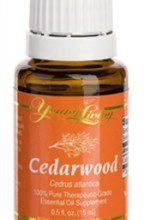
cedarwoodCedarwood is another aromatic with a rich ancient history. The cedarwood referred to in the Bible is the cedar of Lebanon, one of the oldest known aromatics. Only a few of these original cedar trees survive today and are a protected species in Lebanon and Cyprus. The species, Cedrus atlantica, the atlas cedar is probably the closest known relative of this cedar and is exceptionally rich in aromatic compounds known as sesquiterpenes.

Cedar was known for its incorruptibility in ancient times, which is one reason perhaps that the cedars of Lebanon were used to build Solomon’s temple and Herod’s temple where Christ taught. Cedar was an integral part of two biblical purification rituals: one for the lepers and another for those who were impure from touching a dead body. Clothing was also anointed with cedar to protect it from humidity. If we look at the word “anoint” we recognize that it has to be a form of oil or extract because you don’t anoint with dry material. You don’t anoint with bark or twigs, you anoint with liquid, usually with oil.

Cedar is very powerful in its ability to preserve and prevent decay. We see of the records and writings of ancient Egypt that cedar was used in the mummification process. It may have been cedar oil that was combined with the myrrh and the sandalwood as one of the three primary components used in the mummification.

It is very intriguing to note that many of the oils selected by the ancient people in biblical times were all oils that contained high levels of sesquiterpene activity. Cedar is over 95 percent sesquiterpenes. Sesquiterpenes are compounds that have a unique stimulating effect on the limbic region of the brain, including the amygdala, the center of emotions and memory. Cedarwood has been traditionally used for improving the lymphatic system, regenerating arteries, and treating various maladies. However, no recent studies have yet substantiated these effects.

I hope you have enjoyed learning more about the 12 Oils of Ancient Scripture. Join me next time for the last installment where I will discuss the history of cassia.

Essentially Yours,

Gary Young

Technorati Tags: , ,

12 Oils of Ancient Scripture: Galbanum and Cypress

Wednesday, February 3rd, 2010

Galbanum and cypress have interesting historical significance and uses. Today, Gary Young give his account of these two oils.

galbanumBotanically known as Ferula gummosa, galbanum is mentioned in Exodus 30:34: “And the Lord said unto Moses, ‘Take unto thee sweet spices, stacte, and onycha, and galbanum; these sweet spices with pure frankincense of each shall there be a like weight.’” Botanists have written that galbanum’s odor is strongly balsamic, pungent, and disagreeable when burned. There is an interesting suggestion in the Jewish Talmud as to why this powerful, less-than-fragrant resin was used in the holy incense: Every communal fast that does not include sinners of Israel is not a fast. This has been linked to the fact that incense included spices or perfumes with lovely fragrances, but was not complete without one spice: galbanum. With its earthy odor, galbanum is used for its cleansing and body-supporting properties. As we read the account of the anointing oil, we see that galbanum was included in the formula. This suggests that the compounding of these oils is what is really specific and where the strength really lies.

Perhaps one reason why ancient cultures esteemed galbanum may have been due to its ability to affect emotions, which is why some people today use this oil to help gather and concentrate their thoughts. This is one reason why galbanum is a primary oil in the formulation of the blend called Gathering™. It is powerful in its ability to elevate spiritual awareness and communication.

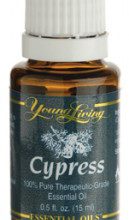
cypressThe oil of cypress originated from a tree so durable that the doors of St. Peter’s Cathedral in Rome are made from it and show no signs of decay even after 1,200 years. The mighty cypress groves of Lebanon were described in the Apocryphal book of Ecclesiasticus as trees which “groweth up to the clouds.” Some Bible scholars believe that cypress may be the gopher wood used to build Noah’s ark. Cypress was historically used to support the circulatory system and is mentioned in Isaiah 44:14: “He heweth him down cedars, and taketh the cypress and the oak, which he strengtheneth for himself among the trees of the forest.” Traditional texts refer to cypress as a decongestant for the veins and the lymphatic system, and as a support for the nervous system and pancreas. However, modern research has yet to verify these properties. Cypress may have also been used in ancient times for the treatment of pulmonary complaints, as well as other conditions, although these uses are not yet confirmed.

Aren’t these oils enthralling? I can’t wait until next time when I will discuss the rich history of cedarwood!

Essentially Yours,

Gary Young

Technorati Tags: , , ,