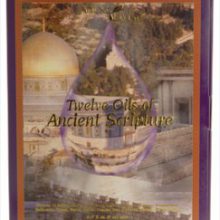
Along with the other oils of ancient scripture, myrtle and hyssop have fascinating historical significance. Join Gary Young as he discusses these two oils.
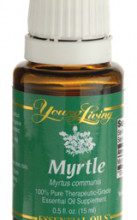
Myrtle is another precious aromatic that appears in historical writings. When the Jews came out of the Babylonian captivity, King Nehemiah reminded them that the Lord commanded that they gather branches from four trees, including myrtle. Nehemiah 8:15: “Go forth unto the mount, and fetch olive branches, and pine branches, and myrtle branches, and palm branches, and branches of thick trees, to make booths, as it is written.” To the ancient Jews, myrtle was symbolic of peace and justice. One of the promises to Israel to the future is that instead of the briar shall come up the myrtle tree (Isaiah 55:13). Ancient texts also mention the use of myrtle for overcoming respiratory conditions, although no clinical research has so far validated this.
Hyssop may be the most difficult biblical plant to identify because so many possibilities have been suggested. Even though Hyssop officinalis may not be the exact plant used in ancient times, it has similar properties to the aromatic herb mentioned throughout the Bible. A quote in Psalms states, “Purge me with hyssop and I shall be clean; wash me and I shall be whiter than snow (Psalms 51:7). The hyssop plant was used during the exodus from Egypt to dab the Hebrew’s door posts with lamb’s blood, protecting them from the plague of death. Anciently, leprosy was thought to be the result of the sin of pride. Rabbi Isaac Bartavelle from the third century AD, wrote about the use of hyssop in cleansing the leper: “You were proud like the cedar and the Holy One, blessed he, humbled you like this hyssop that is crushed by everyone.” The term “officinalis” refers to the fact that hyssop was a part of traditional pharmacopeias. Intriguing historical evidence refers to hyssop being used to treat respiratory conditions and ward off parasites, although current medical research is yet confirming these uses.
I hope that you find this information as fascinating as I do! Please join me next time for a discussion of galbanum and cypress.
Essentially Yours,
Gary Young

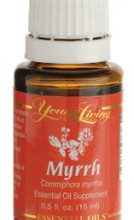
Myrrh was another highly prized aromatic substance mentioned in the Old and New Testament. According to Proverbs 7:17, King Solomon perfumed his bed with myrrh, aloes, and cinnamon. It is fitting that myrrh symbolizes suffering since it is harvested by slicing the tree so the precious resin oozes out and hardens into drops, called tears. Christ was given myrrh at his birth, and along with aloes it was used in preparing his body for burial. Myrrh was also included in the holy anointing oil and was well known to the ancient perfumers. From Esther 2:12 we learn that the candidates from whom King Ahasuerus was to pick his queen were prepared by anointings: six months with oil of myrrh and six months with sweet odors.